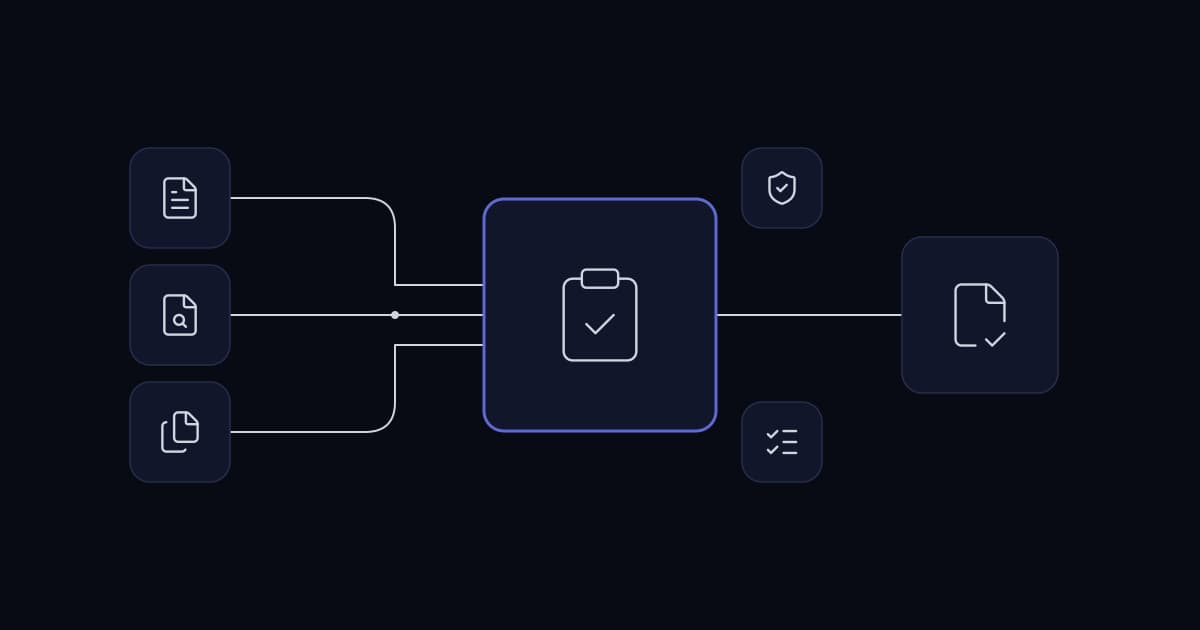
A manager receives a polished operational report, opens three source systems to check it, rewrites the recommendations and sends it back for another pass. The report was generated quickly. The work was not completed quickly.
That distinction should shape an enterprise evaluation of Claude Opus. The useful question is whether the model improves a real handover: from evidence to an accountable person who can approve a decision. Fluency is helpful, but a convincing report that takes longer to verify than to write is a poor investment.
Claude Opus can be considered for complex analysis and software work where review quality matters more than instant responses. Start with one bounded assignment, preserve the evidence behind its conclusions and measure the effort needed to accept the output. Keep business authority in the application and with the responsible team.
What the current Opus release establishes
As checked on 26 September 2026, Anthropic identifies Claude Opus 5 as a model for coding and knowledge work. Its release announcement describes improved efficiency and compares it with the company's Fable tier. Those are vendor claims about a model, not proof that a particular finance, support or engineering workflow will improve.
Use the current release documentation to confirm the exact model offered through your chosen platform. Access through a consumer application, a direct API and a cloud marketplace can involve different controls and commercial arrangements. Do not treat an existing chat subscription as the purchasing decision for a production integration.
Reference
- Anthropic: Introducing Claude Opus 5— Release identity and vendor positioning; checked 26 September 2026.
The rest of this guide is an implementation approach, not a claim that KYCONNECTS has benchmarked every Opus deployment. Examples describe proposed business workflows rather than customer results.
Pick work with an expensive review bottleneck
Consider a service team preparing a monthly explanation of repeat incidents. The underlying records already exist, but engineers spend time reconciling ticket histories, release dates and changes in monitoring. A model might help assemble a defensible narrative. It should not decide the incident cause merely because several events happened at similar times.
A second candidate is reviewing a proposed software change against a written requirement. The model can identify missing error paths, unclear assumptions and places where a migration could affect existing behaviour. The reviewer still needs the actual diff, test results and a clear account of what was not examined.
A third candidate is assembling an internal procurement comparison from approved documents. The benefit comes from extracting comparable obligations and highlighting missing answers. It does not come from inventing a recommendation when the service agreement or data-processing terms are unavailable.
These assignments share a useful property: a competent reviewer can identify an acceptable result. If nobody can describe what a correct answer contains, changing the model will not resolve the uncertainty.
Separate assistance from authority
An incident analysis can propose a database check without running a production repair. A code review can suggest a patch without merging it. A procurement brief can list unresolved questions without accepting a supplier's contract.
Write those distinctions into the workflow before the pilot. Otherwise a successful demonstration tends to acquire extra permissions informally, and the eventual system has more authority than the original business case contemplated.
Give the model an evidence package
Do not begin by granting access to every document folder. Prepare the smallest useful package for the selected assignment: the question, relevant records, time period, approved terminology and the decision the reviewer must make.
For an incident review, include event timestamps with time zones, deployment identifiers, relevant service indicators and links back to the ticket system. Keep observations separate from hypotheses. If a service recovered after a restart, the package should say exactly that. It should not relabel the restart as a confirmed root-cause fix.
For software work, include the acceptance criteria and the interfaces that must remain compatible. Explain whether the assignment permits dependency changes, data migrations or only a local correction. These are ordinary engineering constraints, but they are easy to omit when the request is phrased as a conversation.
Make missing evidence a valid outcome
A useful answer can say that two logs cannot be compared because their timestamps use different zones. It can identify an absent rollback plan or an undocumented field owner. Treat such findings as work completed when they prevent a premature decision.
Requiring a complete recommendation on every run encourages the system to conceal uncertainty in confident prose. The output contract should allow supported findings, unresolved questions and requests for specific missing records.
Design an output that a colleague can inspect
The review package should be shorter than the source bundle without hiding how it was assembled. Ask for a concise recommendation, the records supporting it, assumptions, alternatives and the next reversible action.
This is not a request for private model reasoning. A reviewer needs observable evidence and a decision rationale: which ticket supports a claim, which requirement a patch addresses and which test confirms the relevant behaviour.
| Review item | Useful evidence | Reason to return the result |
|---|---|---|
| Incident finding | Timestamped records and affected service | Correlation presented as established cause |
| Code recommendation | Diff, acceptance criterion and test result | Changed behaviour outside the requested scope |
| Supplier comparison | Named document and relevant provision | Missing terms replaced with an assumption |
| Operational recommendation | Owner, dependency and reversible next step | An action nobody has authority to approve |
Keep the original source identifiers intact. Replacing them with a model-generated numbering scheme makes an answer look tidy while making verification harder.
Integrate through a controlled job
For repeatable work, represent the assignment as a job in the existing portal or operations system. Store the requested scope, requester, model configuration, input versions and output status. A chat history alone is a weak operational record because it mixes instructions, revisions and informal discussion.
The application should fetch permitted records, assemble the request and validate the result. It should decide which tools are available for that job. A model-generated request for broader access must pass the same authorization checks as any other application request.
A practical sequence is to collect approved inputs, request the analysis, validate the expected fields, attach evidence references and place the draft in a review queue. Acceptance becomes a recorded state change by an authorized reviewer.
Keep the source system authoritative
An accepted analysis should not silently overwrite the ticket description or the original requirement. Save it as a dated, attributed interpretation with a link to the source. If the underlying record changes, mark the analysis as potentially stale.
This separation helps when someone disputes a conclusion later. The business can distinguish what the system recorded at the time from what the model inferred from it.
Reference
- AI integration without replacing existing systems— How the integration layer fits around existing business applications.
Measure the work around the model
Track review minutes, correction categories, accepted findings and unsupported claims. Record both clean successes and cases returned to the author. A model that handles easy assignments beautifully may still create most of its cost in a small set of difficult exceptions.
Compare equivalent work. Give reviewers a mixture of typical cases and difficult cases, including incomplete evidence and conflicting instructions. Keep the review criteria stable while testing alternatives.
If the existing manual process takes an hour, do not compare it with the model's generation time alone. Include preparation, verification, correction and the time needed to investigate mistakes. Where time is recorded, define whether it represents active work or elapsed time waiting in a queue.
Use a stopping rule
Agree in advance what would make the pilot unsuitable. Examples include repeated unsupported claims about production incidents, inability to preserve customer boundaries or review effort that consistently exceeds the current process.
A stopping rule makes the evaluation commercially honest. The outcome may be to use a simpler model, reduce the task scope or improve the input records before trying again.
Model cost is only one line in the budget
The operating cost includes API usage, retrieval, application hosting, monitoring and human review. It also includes maintenance when the source system or model interface changes. A high-capability model can be economical for a small number of difficult jobs; it can be unnecessary for thousands of straightforward classifications.
Use observed usage from the actual pilot to estimate monthly consumption. Include retries and rejected drafts. Apply the current provider rates to those measurements rather than publishing an assumed price per document.
Separate one-time engineering from recurring operation. A custom integration needs an owner for credentials, failure handling, access reviews and changes to the output contract. A successful pilot without that owner is a temporary experiment, not an operational service.
Protect the boundary around confidential material
Before using live business records, classify what the job sends outside your infrastructure. A technical log can contain customer identifiers, internal addresses or fragments of request content. A code repository can contain secrets even when the requested file does not.
Review the provider route and the configured data controls for that route. Procurement should record what is sent, where it is processed, how long relevant data is retained and who can access it. Product names alone do not answer those questions.
Use separate credentials for the integration, scoped to the necessary systems. Keep secrets out of prompts and model-visible tool results. Apply the same discipline to application traces, because a debugging interface can otherwise become a second store of confidential source material.
A workable pilot for a service team
In a hypothetical pilot, an operations manager chooses the preparation of repeat-incident reviews. The model receives a sanitized incident bundle and produces a draft with evidence references. Engineers judge whether the draft identifies real gaps and whether its recommendations follow from the records.
The team starts with completed incidents so that no generated suggestion can interfere with an active response. It then moves to current incidents in an advisory role. Production changes remain outside the model's permissions.
At the end of the pilot, the manager reviews representative accepted and rejected outputs with engineering. If the main errors come from inconsistent ticket records, the next investment is better incident documentation. If evidence is sound but review remains expensive, the task may need a narrower output.
The decision to proceed should name the accountable owner, expected workload, review capacity, operating budget and next reassessment date. That is a stronger deliverable than a slide declaring that the business has adopted Opus.
Plan for changes after approval
A model change, a new ticket connector or a revised incident template can alter the result. Keep a small regression set from the pilot and rerun it before making those changes broadly available.
Preserve the previous configuration long enough to compare behaviour. If an update makes answers more elaborate but harder to verify, the review process should be able to reject it. Newer is a release attribute, not an acceptance criterion.
What to bring to an Opus integration assessment
Bring a redacted example of the assignment, the source records needed to complete it and an example of an acceptable finished result. Include the current review process and the reasons work is usually returned. That is enough to begin a useful technical conversation without sharing an entire production dataset.
Ask the implementation team to return a proposed boundary, an evaluation plan and a recurring-cost model. A proposal should identify which parts can remain in the existing software, which need a connector and which need human judgement. It should also explain what evidence would justify stopping the project.
The most valuable first engagement may be a workflow assessment rather than a full build. If the records are inconsistent or the review criteria are unclear, fixing those conditions can improve the current process and make a later model evaluation more meaningful.
Questions buyers should settle
Is Claude Opus automatically the best model for enterprise work?
Claude Opus should be evaluated against a specific enterprise task. Review effort, evidence quality, latency, data controls and total operating cost matter more than the model's general reputation.
Can an Opus integration make production changes?
An integration can expose tools that change production systems, but the business must define and enforce the authority for those actions. A useful first deployment can remain advisory and require a separate approved execution path.
What should be measured first?
Measure the time and corrections required to accept a completed output. Include input preparation and failed attempts so that the comparison reflects the whole workflow rather than generation speed.
Make the next decision small
A sensible next step is to document one review queue, identify its evidence sources and collect representative assignments. That gives the team something concrete to test and procurement something concrete to assess.
KYCONNECTS can help scope the integration around an existing CRM, portal or operational system. The useful starting point is the work that needs approving, not a commitment to use one model everywhere.
Reference
- AI integration services— Assess a bounded workflow and its operating requirements.
- AI evaluation: how to know whether it is working— Build the task-specific evaluation behind the purchasing decision.
Discuss your requirements
- Discuss an Opus workflow pilot— Bring one recurring review task, redacted inputs and the acceptance criteria your team uses.
Services This Relates To
Written by KYCONNECTS Engineering. Client names are withheld under confidentiality.